Topic cluster: Small Precision Turned Parts
Quick Answer
Small precision turned parts should be quoted with clear drawings, material grade, quantity, critical diameters, threads, burr control, surface finish, and inspection requirements. Small size does not always mean low complexity.
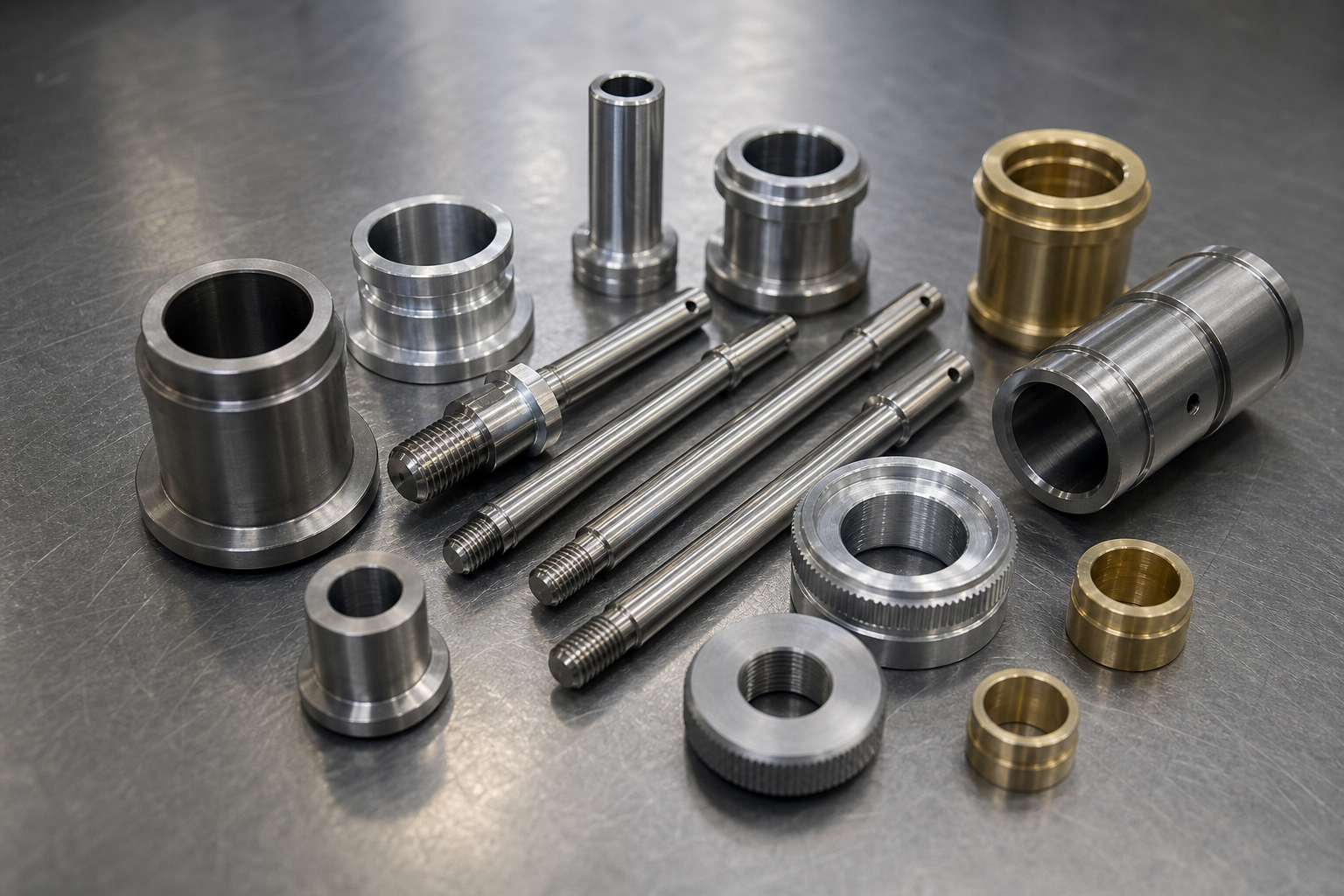
Small precision turned parts are used in equipment, automation, instruments, connectors, fixtures, and repair assemblies. They may include pins, spacers, sleeves, collars, bushings, small shafts, threaded inserts, and custom cylindrical components.
Buyer problem
Buyers often expect small turned parts to be easy because the dimensions are compact. In practice, the cost and risk may come from tiny grooves, burr-sensitive edges, internal bores, short thread starts, small batch setup time, or inspection requirements that are tighter than the part function actually needs.
Engineering explanation
CNC turning for small parts may require careful clamping, bar stock selection, tool access review, drilling, boring, grooving, threading, chamfering, deburring, and inspection. The supplier should understand which features are functional and which dimensions are general, because small non-critical surfaces should not drive the entire quotation.
Key factors for quotation
- Material grade and bar stock diameter
- Critical ID, OD, length, groove, and thread features
- Burr control on small holes, thread starts, and internal edges
- Prototype quantity versus batch quantity
- Inspection method for small diameters and mating features
RFQ checklist
- Send PDF drawing and STEP/STP model when possible
- Mark critical dimensions and fit features
- State material, finish, quantity, and expected repeat demand
- Explain whether the part is a spacer, locator, connector, sleeve, or moving component
- Request inspection report only for features that affect function
Common mistakes
- Assuming small parts are automatically low cost
- Using tight tolerance on every dimension without assembly reason
- Not defining thread standard or internal bore requirement
- Ignoring burrs because the part is visually small
- Comparing quotes without checking inspection scope
How buyers should review supplier feedback
A useful supplier response should identify the controlling dimensions, likely turning operations, possible secondary operations, and inspection focus. For very small parts, ask whether burrs, thread starts, or tiny internal corners need special attention.
Before approving a quote, confirm whether setup cost is included, whether material is standard, whether tooling assumptions match the drawing, and whether packing prevents parts from scratching each other during shipment.
Practical example
For a small threaded spacer, the RFQ should show thread standard, thread depth, bore size, outside diameter, length, chamfer, and whether internal burrs are acceptable. If the spacer fits into a larger assembly, include mating part notes or a sample photo.
How MasterCNC Tech supports review
We review small precision turned part RFQs by checking drawing clarity, material, tolerance, process route, burr risk, inspection focus, and whether prototype and batch quantities should be quoted separately.
MasterCNC Tech is a Shanghai-based RFQ review and manufacturing coordination partner. Representative article images are not described as customer orders. Each project is reviewed from the buyer’s actual drawing, material, quantity, tolerance, inspection, and packing requirements.
Related service pages
Upload Drawing / Get Quote
Upload STEP, STP, PDF, DXF, DWG, IGES, ZIP files, or sample photos. Include material, quantity, tolerance, surface finish, and target delivery requirements for review.