Topic cluster: Quality and Inspection Buyer Guide
Quick Answer
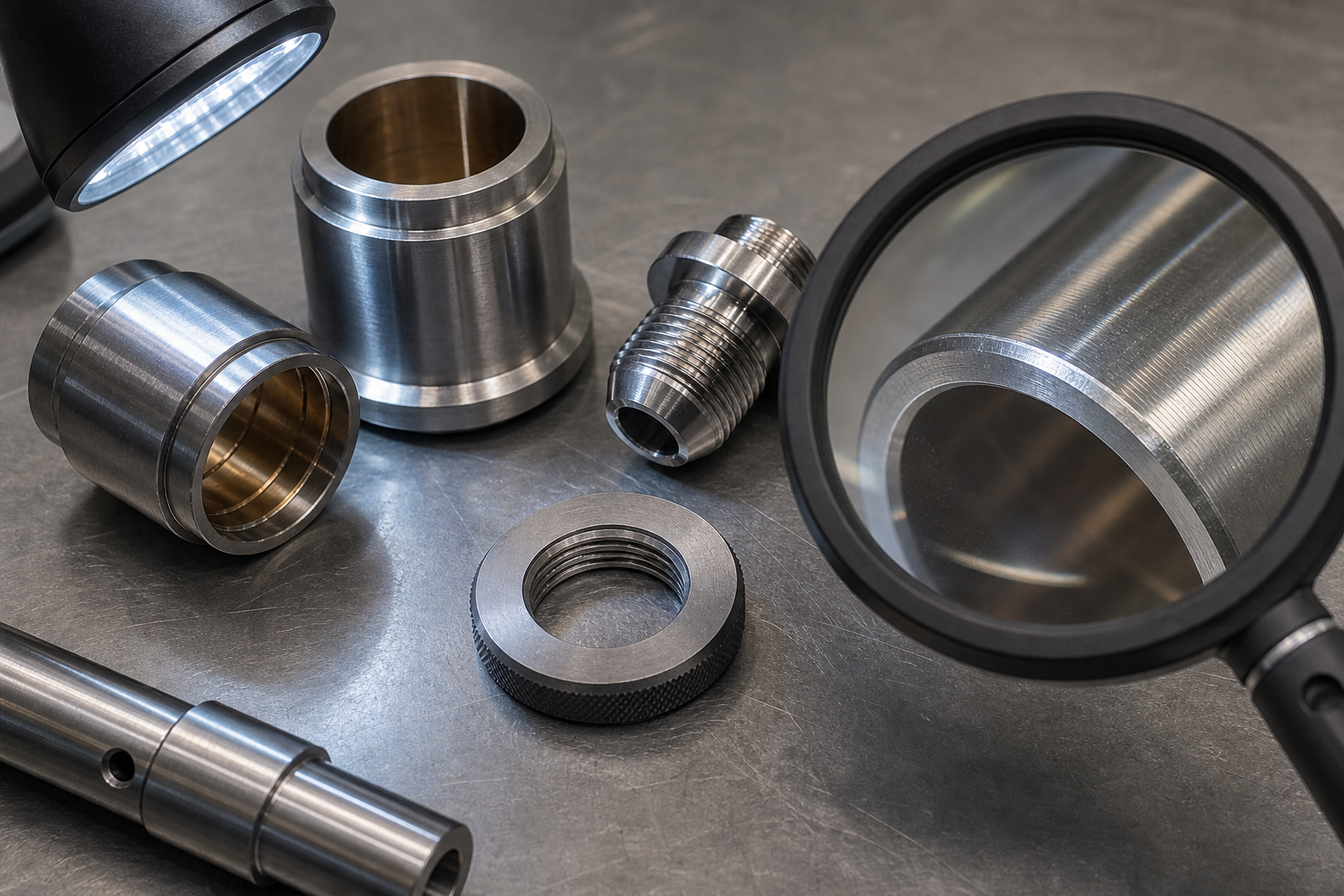
Surface finish and burr control should be defined where they affect fit, sealing, movement, safety, or appearance. Buyers should mark critical surfaces and burr-sensitive edges before quotation.
Surface finish and burr control are common sources of disagreement in custom CNC machining. A drawing may define dimensions clearly but still leave surface condition, edge break, and internal burr expectations open to interpretation.
Buyer problem
Buyers sometimes expect smooth surfaces and clean edges without specifying which areas matter. Suppliers may quote standard machining finish and normal deburring, while the buyer expects a higher finish on sealing faces, bearing seats, visible areas, or internal bores.
Engineering explanation
Surface finish depends on material, tool condition, cutting parameters, geometry, rigidity, and secondary finishing. Burr control depends on edge geometry, tool exit, holes, slots, internal features, and access. Tight surface or burr requirements can increase machining time, inspection time, and manual handling.
Key factors for quotation
- Functional surfaces such as bearing seats, sealing faces, bores, and sliding areas
- Cosmetic surfaces visible after assembly
- Edge break, chamfer, and burr-sensitive internal features
- Material behavior, coating, passivation, anodizing, or polishing requirements
- Inspection method, sample approval, and packing protection
RFQ checklist
- Mark critical surfaces on the drawing
- State required finish only where it affects function or appearance
- Define burr-sensitive holes, threads, grooves, and internal edges
- Provide photos of acceptable surface quality if available
- Confirm packing requirements for scratch-sensitive surfaces
Common mistakes
- Using vague words such as smooth or perfect without measurable notes
- Requesting high finish on every surface without functional reason
- Ignoring internal burrs in bores or cross holes
- Not defining whether machining marks are acceptable
- Forgetting that packing can damage finished surfaces
How buyers should review supplier feedback
Supplier feedback should separate standard machined surfaces from functional or cosmetic surfaces that need closer control. If the part has threads, holes, or internal bores, ask how burrs will be checked and removed.
For many industrial parts, a practical finish is better than an over-specified finish. Buyers should protect functional surfaces and visible areas without making every non-critical face expensive.
Practical example
For a sleeve, the inner bore and face contact areas may require cleaner finish than the outside non-functional surface. For a connector, thread starts, sealing faces, and chamfers may matter more than hidden surfaces.
How MasterCNC Tech supports review
We help buyers clarify surface finish and burr control before quotation, so inspection scope, machining route, and packing requirements are aligned with the drawing and application.
MasterCNC Tech is a Shanghai-based RFQ review and manufacturing coordination partner. Representative article images are not described as customer orders. Each project is reviewed from the buyer’s actual drawing, material, quantity, tolerance, inspection, and packing requirements.
Related service pages
Upload Drawing / Get Quote
Upload STEP, STP, PDF, DXF, DWG, IGES, ZIP files, or sample photos. Include material, quantity, tolerance, surface finish, and target delivery requirements for review.