Topic cluster: Precision Shaft Machining
Quick Answer
Custom shaft prototyping should confirm material, bearing seats, threads, holes, straightness, runout, surface finish, inspection, and packing before batch production assumptions are made.
Custom shaft prototypes are often used to verify fit, motion, assembly, or replacement function before a larger order. A prototype shaft can still require careful engineering review because small drawing details may affect later batch production.
Buyer problem
Prototype shaft buyers sometimes focus only on receiving one or a few pieces quickly. If the first sample is not reviewed for batch feasibility, the later production order may need changes to material, tolerance, process route, inspection, or packing.
Engineering explanation
Shaft machining may include turning, facing, drilling, threading, grooving, chamfering, cross-hole drilling, milling flats, deburring, and inspection. Longer shafts require attention to support method, straightness, runout, surface marks, and handling. Prototype review should separate what must be proven now from what will matter in batch production.
Key factors for quotation
- Material grade and whether heat treatment or coating is required
- Bearing seat diameter, shoulder face, thread, groove, and hole features
- Straightness, runout, concentricity, and surface finish requirements if specified
- Prototype quantity, test purpose, and expected batch quantity
- Packing protection for long or polished shafts
RFQ checklist
- Send PDF drawing and STEP/STP model
- Explain what the prototype must prove
- Mark bearing seats, threads, holes, and critical contact surfaces
- Tell the supplier whether batch production may follow
- Request inspection focus before machining starts
Common mistakes
- Treating the prototype as separate from future production
- Not checking whether tolerance is practical for batch quantities
- Ignoring straightness or runout on long shafts
- Forgetting packing protection during sample shipment
- Changing material after sample approval without review
How buyers should review supplier feedback
Supplier feedback should identify whether the part can be turned directly, whether secondary milling or drilling is needed, and which features may drive cost. For a prototype, the supplier should also clarify what assumptions may change in batch production.
A good prototype RFQ is not only a sample request. It should help the buyer learn whether the drawing, material, tolerance, and inspection plan are practical before ordering more parts.
Practical example
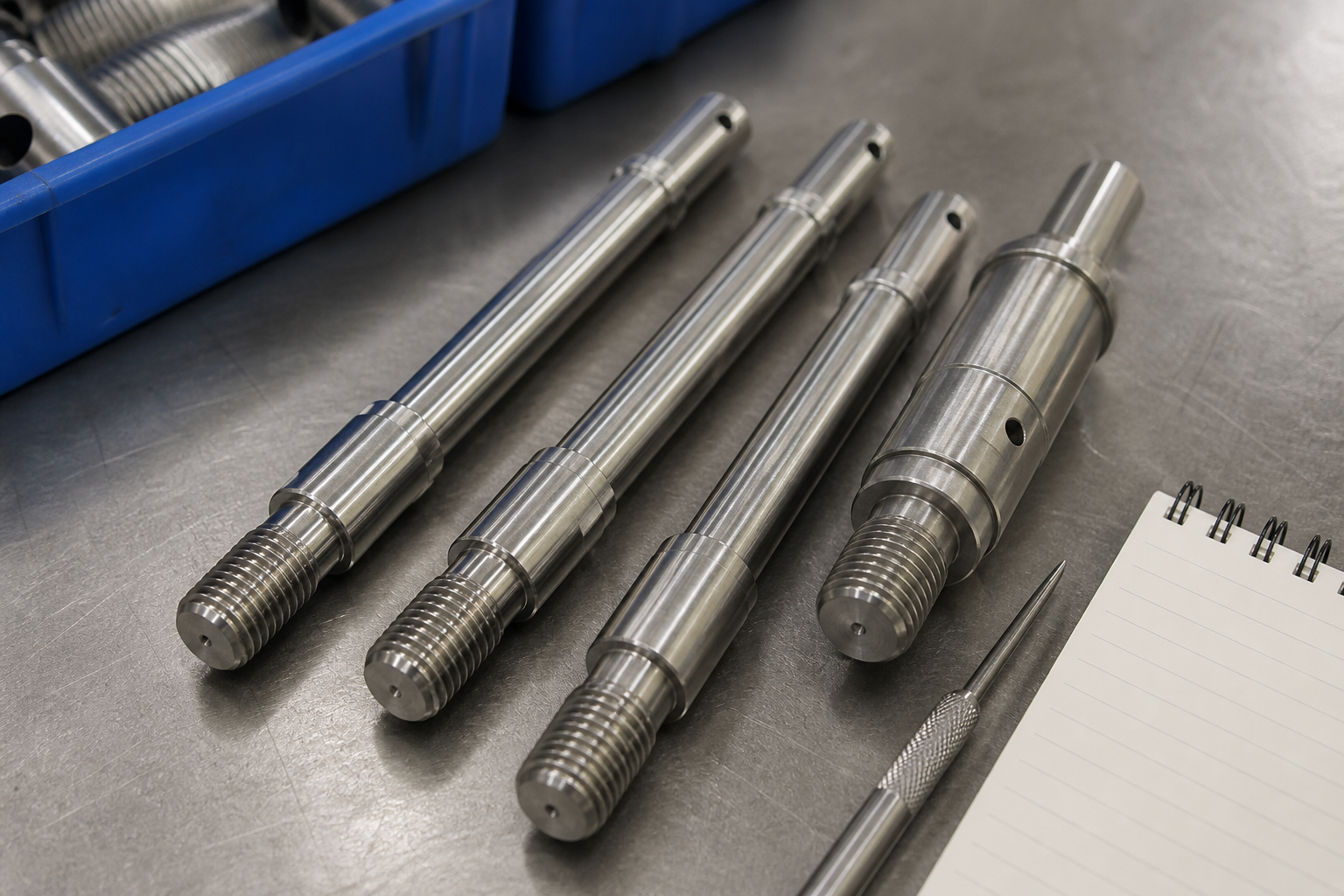
For a stepped shaft with threaded ends and cross holes, the buyer should define thread standard, hole position, bearing seat tolerance, straightness or runout if required, surface finish, and how the sample will be inspected before approval.
How MasterCNC Tech supports review
We review custom shaft prototype RFQs by checking machining route, tolerance risk, inspection focus, and whether the part should be quoted separately for prototype and batch quantities.
MasterCNC Tech is a Shanghai-based RFQ review and manufacturing coordination partner. Representative article images are not described as customer orders. Each project is reviewed from the buyer’s actual drawing, material, quantity, tolerance, inspection, and packing requirements.
Related service pages
Upload Drawing / Get Quote
Upload STEP, STP, PDF, DXF, DWG, IGES, ZIP files, or sample photos. Include material, quantity, tolerance, surface finish, and target delivery requirements for review.