Topic cluster: Deburring and Edge Quality
Quick Answer
Deburring should be specified before quotation when edges, holes, threads, grooves, or internal bores affect assembly, safety, sealing, or appearance. The drawing should mark burr-sensitive areas instead of relying on vague quality wording.
Deburring is one of the most common details that affects CNC machined part usability. A part can meet basic dimensions but still fail assembly if sharp edges, internal burrs, thread burrs, or hole burrs are not controlled.
Buyer problem
Many RFQs say only remove burrs without explaining which edges are critical. Suppliers may then quote a basic deburring level, while the buyer expects smoother internal edges, clean threads, or cosmetic chamfers. This mismatch can create rework after production.
Engineering explanation
Deburring method depends on material, geometry, hole size, thread type, surface finish, and access. External edges may be chamfered during turning or milling. Internal bores, cross holes, intersecting grooves, and thread starts may need manual review or special tools. Over-deburring can also damage functional edges or alter dimensions.
Key factors for quotation
- Burr-sensitive edges around holes, grooves, bores, and threads
- Material behavior such as stainless steel, aluminum, brass, or carbon steel
- Whether edges are functional, cosmetic, safety-related, or sealing-related
- Allowed chamfer size or edge break notes
- Inspection method for internal burrs and thread starts
RFQ checklist
- Mark critical edges on the 2D drawing
- State whether cosmetic appearance or assembly function is more important
- Define thread and hole burr requirements before quotation
- Provide sample photos if a previous burr problem exists
- Confirm whether edge break dimensions are inspection items
Common mistakes
- Using vague words such as smooth or perfect without measurable notes
- Not identifying internal burr areas
- Asking for heavy deburring near tight fit features
- Ignoring thread-start burrs on connectors and fittings
- Not confirming whether deburring is included in the quote
How buyers should review supplier feedback
Supplier feedback should mention which edges are easy to machine with chamfer tools and which internal areas require additional handling. If the part has cross holes or internal threads, ask how those burrs will be checked.
Deburring is not only a cosmetic step. For moving parts, connectors, sleeves, and shafts, burr control can affect assembly, wear, sealing, safety, and packing condition. The quotation should match the required edge standard.
Practical example
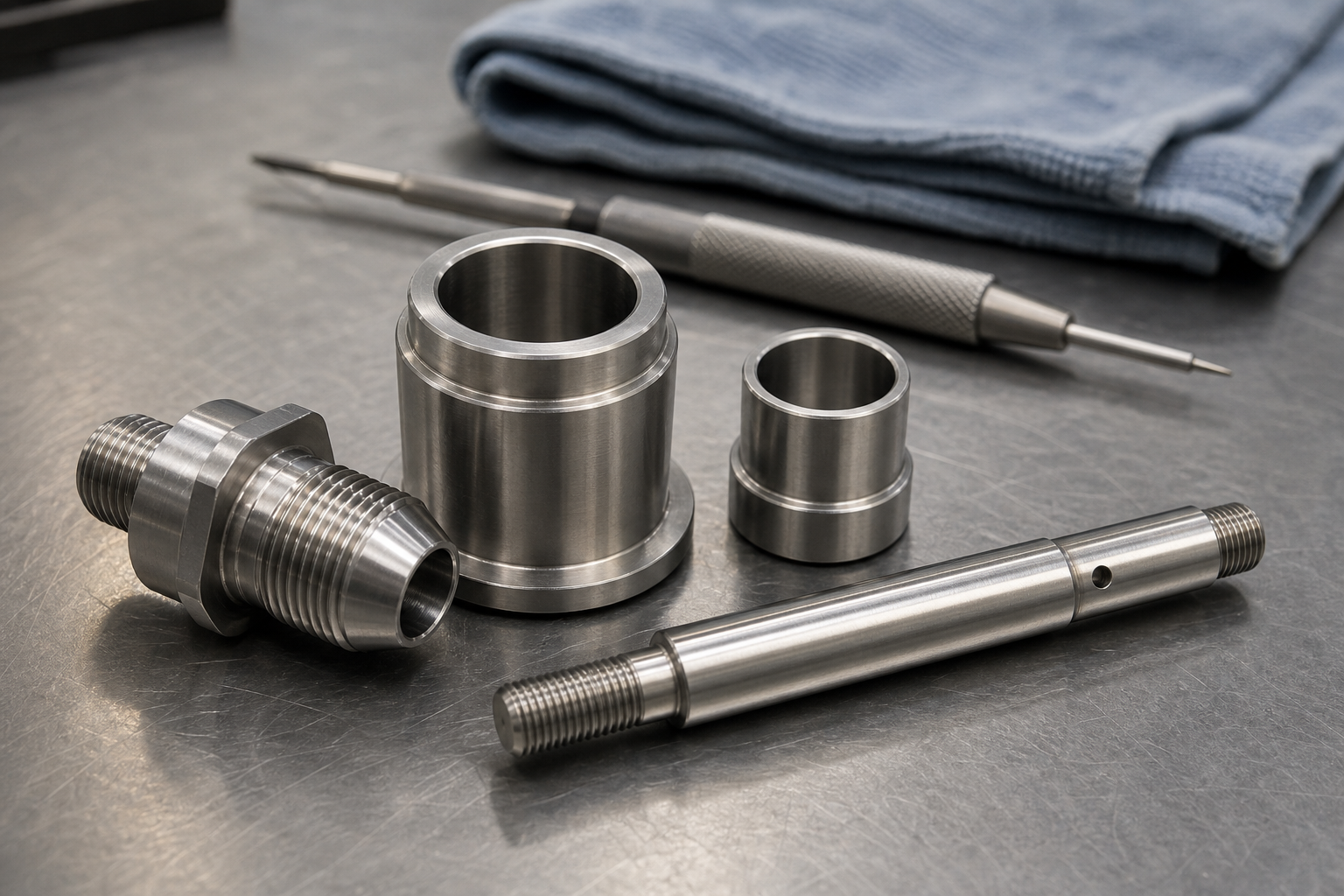
For a threaded connector, the buyer should mark thread starts, sealing faces, through holes, and mating edges as burr-sensitive if those areas affect assembly. A simple deburr all edges note may not be enough for a reliable quote.
How MasterCNC Tech supports review
We review deburring requirements during RFQ so the machining partner understands which edges matter, what inspection is practical, and how burr control affects cost and production planning.
MasterCNC Tech is a Shanghai-based RFQ review and manufacturing coordination partner. Representative article images are not described as customer orders. Each project is reviewed from the buyer’s actual drawing, material, quantity, tolerance, inspection, and packing requirements.
Related service pages
Upload Drawing / Get Quote
Upload STEP, STP, PDF, DXF, DWG, IGES, ZIP files, or sample photos. Include material, quantity, tolerance, surface finish, and target delivery requirements for review.