Topic cluster: CNC Cost and Material Buyer Guide
Quick Answer
Material substitution can reduce CNC machining cost only when strength, corrosion resistance, wear, heat, surface finish, tolerance stability, and buyer approval are reviewed before quotation.
Buyers sometimes ask whether a CNC machined part can be made from a lower-cost or easier-to-source material. This can be reasonable, but substitution should never be treated as a simple price change without engineering review.
Buyer problem
A quotation may become cheaper if material changes, but the part may no longer meet corrosion, strength, wear, conductivity, weight, or assembly requirements. Without clear approval, material substitution can create serious procurement and quality risk.
Engineering explanation
Material affects cutting time, tool wear, tolerance stability, burr formation, surface finish, heat treatment, coating, and inspection. Stainless steel, carbon steel, aluminum, brass, copper alloys, and engineering plastics each behave differently during turning and milling.
Key factors for quotation
- Required material grade and acceptable equivalent standards
- Strength, wear, corrosion, heat, weight, and conductivity requirements
- Tolerance stability, burr control, surface finish, and coating compatibility
- Raw material availability, minimum purchase quantity, and batch size
- Buyer approval process and drawing revision control
Buyer checklist
- Tell the supplier whether alternatives are allowed
- State the working environment and load if material is flexible
- Confirm whether coating, passivation, or heat treatment changes with material
- Keep written approval and drawing revision control for substitution
RFQ file checklist
- Current drawing and specified material grade
- Allowed alternative materials if any
- Application notes such as load, corrosion, wear, temperature, or cosmetic surface
- Quantity and inspection requirements
Common mistakes
- Changing material only to reduce cost without checking function
- Quoting "stainless steel" without grade or equivalent standard
- Assuming aluminum, brass, and steel can share the same tolerance risk
- Not updating the drawing or purchase document after approving substitution
What buyers should prepare before RFQ
For drawing-based CNC machining, the most useful RFQ package includes a 2D drawing for tolerances and notes, a 3D model for geometry review, material grade, quantity, surface finish, and the application or assembly function of the part. If the part connects with another component, include thread standard, mating dimensions, bearing seat information, or sample photos when available.
Buyers do not need to solve every manufacturing detail before sending an RFQ. The important point is to make the engineering intent clear: which features must fit, which surfaces are cosmetic, which dimensions are critical, and whether the order is for prototype testing, small batch production, or repeat OEM supply.
How to judge supplier feedback
A useful supplier response should not only repeat the part name and unit price. It should show that the drawing was reviewed: material, tolerance, process route, critical dimensions, finish, inspection points, and packing requirements should all be considered. If a supplier quotes immediately without asking about missing tolerance, thread, material, or quantity details, the quotation may be based on assumptions rather than engineering review.
Before comparing prices, check whether each supplier is quoting the same scope. One price may include deburring, thread inspection, surface protection, and export packing, while another may only include basic machining. For OEM buyers, the cheapest quote can become expensive if the first batch requires rework, unclear inspection, or repeated communication after production has already started.
Practical RFQ example
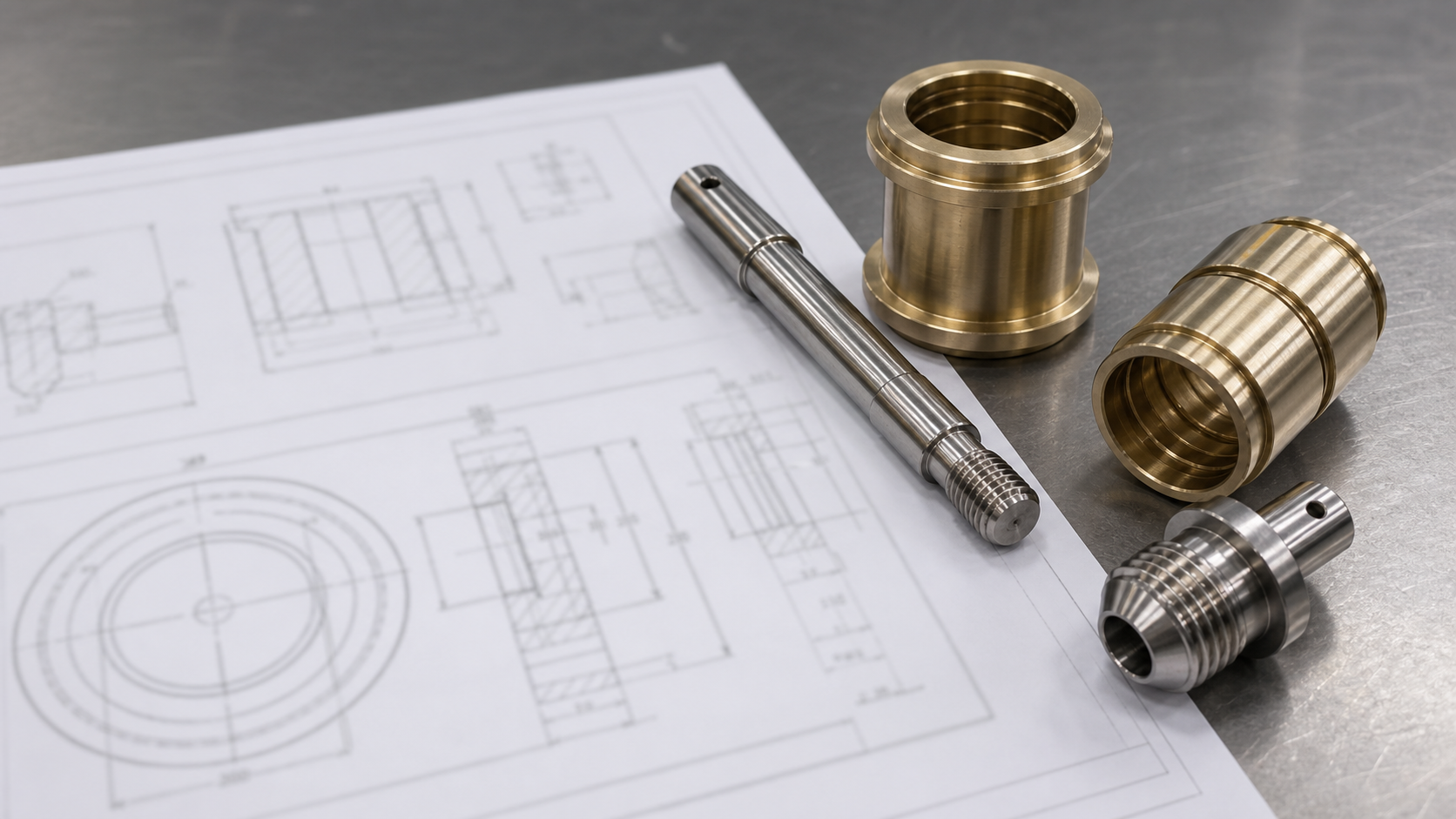
A sleeve may be quoted in brass, bronze, stainless steel, or carbon steel depending on wear, corrosion, friction, and cost. A shaft may need stainless steel for corrosion resistance or alloy steel for strength. The correct material should be confirmed from the application, not chosen only by unit price.
When you prepare a similar project, avoid sending only a part name. A useful RFQ should explain what the part does, which dimensions affect assembly, whether surface marks matter, and whether the project is a one-time prototype or a repeat production candidate.
How we support RFQ review
MasterCNC Tech can review material options during RFQ, but final material selection should follow the buyer drawing, application requirements, and written approval before production.
After receiving a complete RFQ, we review the drawing for manufacturability, compare the process route with the required tolerance, and check whether inspection needs are practical for the requested quantity. This helps reduce unclear quotation assumptions and gives buyers a more useful basis for comparing suppliers.
Final note for buyers
If you are not sure whether your drawing is complete, send what you have first. A useful first review can start from a PDF drawing, STEP file, old sample photo, or even a sketch with key dimensions. The important point is to start the discussion with material, quantity, tolerance expectations, and the part function, then clarify details before production.
Related service pages
Upload Drawing / Get Quote
Upload STEP, STP, PDF, DXF, DWG, IGES, ZIP files, or sample photos. Include material, quantity, tolerance, surface finish, and target delivery requirements for review.